
Live streaming has become easier than ever, but not all broadcasts have the same requirements. While shared platforms and cloud services work well for casual use, many professional broadcasters continue to rely on dedicated RTMP servers. This choice is not about nostalgia or habit. It is about control, reliability, and long-term stability.
What makes a dedicated RTMP server different?
A dedicated RTMP server is not shared with other users. All CPU, memory, disk I/O, and network bandwidth are reserved for a single broadcaster or organization. This matters when running continuous streams, TV automation, or live events where interruptions are not acceptable.
Shared environments often introduce unpredictable performance. Another user’s traffic spike can affect latency or bitrate consistency. Dedicated servers eliminate this variable entirely.
When does dedicated hosting become necessary?
Dedicated RTMP hosting becomes important when:
- You run a 24/7 channel
- You stream high-bitrate video continuously
- You require stable latency for live interaction
- You manage multiple input streams simultaneously
Many broadcasters start on shared RTMP hosting and later upgrade once their audience or technical demands grow. Dedicated servers allow deeper customization of encoder settings, firewall rules, and streaming workflows.
Another often overlooked advantage is troubleshooting. With a dedicated server, diagnosing issues is faster because there are no unknown third-party processes interfering with the system.
Dedicated RTMP in a modern ecosystem
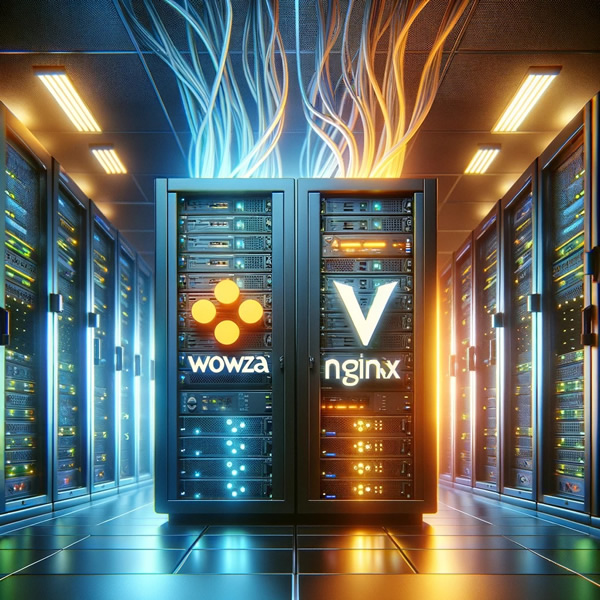
Dedicated does not mean outdated. Modern dedicated RTMP servers frequently combine NGINX RTMP, Wowza, and HLS output, making them compatible with all major players and devices.
Professional hosting providers have also simplified management. Control panels, monitoring tools, and automated restarts reduce the operational burden that once made dedicated servers intimidating.
Despite the rise of cloud platforms, dedicated RTMP hosting remains the backbone for broadcasters who need predictability above all else.
Security and Data Sovereignty
Beyond performance, dedicated RTMP servers offer a level of security and data privacy that shared platforms cannot match. In a dedicated environment, broadcasters have full control over who can access the stream and how the data is encrypted. This is particularly critical for corporate town halls, private events, or internal communications where sensitive information is shared. By implementing custom authentication protocols and IP whitelisting, organizations can ensure that their content remains within their intended perimeter, free from the data-mining practices often associated with free or public streaming platforms.
Scalability and Hybrid Workflows
While the server itself is “dedicated,” it often serves as the powerful core of a hybrid distribution strategy. Many broadcasters use a dedicated RTMP server as a primary ingest point—a “master” hub—which then restream (or “transmux”) the content to multiple destinations like YouTube, Twitch, or a global Content Delivery Network (CDN). This architecture provides the best of both worlds: the rock-solid stability of a private server for the initial upload, and the massive reach of public platforms for the end-viewer. As broadcasting needs evolve, this setup allows for seamless scaling, enabling users to add new outputs or social media targets without ever compromising the integrity of the original source stream.
To help you compare your options, here is a detailed breakdown of the differences between shared and dedicated RTMP environments.
Shared vs. Dedicated RTMP Hosting
| Feature | Shared RTMP Hosting | Dedicated RTMP Server |
| Resource Allocation | Resources (CPU, RAM) are shared with other users. | 100% of hardware resources are reserved for you. |
| Performance | Potential “noisy neighbor” effect; bitrate may fluctuate. | Consistent, predictable bitrate and low latency. |
| Customization | Limited to provider-defined settings. | Full root access; custom modules and firewall rules. |
| Security | Standard security; shared IP addresses. | Enhanced security; isolated environment and private IP. |
| Reliability | Good for short, casual streams. | Essential for 24/7 “Always-on” linear channels. |
| Troubleshooting | Support handles back-end; limited visibility for user. | Full log access for deep technical diagnostics. |
| Cost | Generally lower, pay-per-use or low monthly fee. | Higher fixed cost due to reserved hardware. |
Key Takeaway
Choosing between these two usually comes down to the cost of failure. If a stream dropping for 30 seconds is a minor inconvenience, Shared is likely sufficient. If a stream drop results in lost revenue or a breach of contract (like in professional sports or corporate events), a Dedicated server is the standard industry requirement.